- Schedule. Mon - Sat 10.00 - 18.00

4-Chloro benzophenone
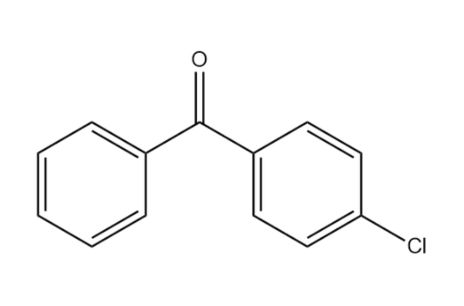
4-Chlorobenzophenone
4-Chlorobenzophenone (also known as p-Chlorobenzophenone)
Applications
4-Chlorobenzophenone is a versatile organic compound primarily used as a chemical intermediate and photoinitiator across various industries due to its unique chemical properties and ability to absorb UV light.
Key applications include:
1. Pharmaceutical Intermediates
It serves as a key building block in the synthesis of various pharmaceutical compounds, including certain antihistamines (e.g., as a metabolite or precursor for drugs like Cetirizine, Hydroxyzine, Meclizine, and Chlorcyclizine).
It can be an intermediate for some antidepressants (particularly SSRI category) and antipsychotic medications.
Used in the synthesis of compounds with muscle relaxant, antispasmodic, and local anesthetic properties.
2. Photoinitiator in Polymer Chemistry
One of its major uses is as a photoinitiator in UV-curable coatings, inks, and adhesives. When exposed to UV light, it generates free radicals that initiate polymerization reactions, leading to rapid curing and improved durability of the products.
3. UV Filter/UV Absorber
Due to its strong UV absorption properties, it is incorporated into formulations that require protection from ultraviolet radiation.7 This includes:
Cosmetics and Personal Care Products:
Used as a UV filter to protect skin from harmful UV rays and to enhance the stability and shelf-life of the product itself by preventing UV-induced degradation.
Polymer Stabilization:
Functions as a stabilizing agent in certain polymer formulations to improve their resistance to degradation caused by UV light.
4. Agrochemicals
It is utilized as an intermediate in the synthesis of some herbicidal and pesticidal compounds.
5. Dyes and Pigments
Used as an intermediary in the synthesis of specific dyes, particularly those employed in the textile and printing ink industries. It can also be involved in the synthesis of photochromic dyes.
6. Organic Synthesis
As a functionalized benzophenone, it is a valuable reagent in general organic synthesis for the construction of complex organic molecules through various reactions, including cross-coupling reactions (e.g., Suzuki and Heck reactions).
7. Fragrance Industry
While not a fragrance itself, it can serve as a precursor in the synthesis of certain fragrance compounds.